
Home Learning
Building Strong Foundations
Children learn best when they feel safe, confident and able to ask questions about the things they are curious about. You can support this at home by talking together, encouraging independence and celebrating small successes. Everyday routines such as getting dressed, helping tidy up, choosing a book independently all help children develop important life skills that support learning in school. Helping your child to build resilience matters because them the inner strength to cope with challenges, adapt to change and keep going when things feel difficult.
Sharing a Love of Reading
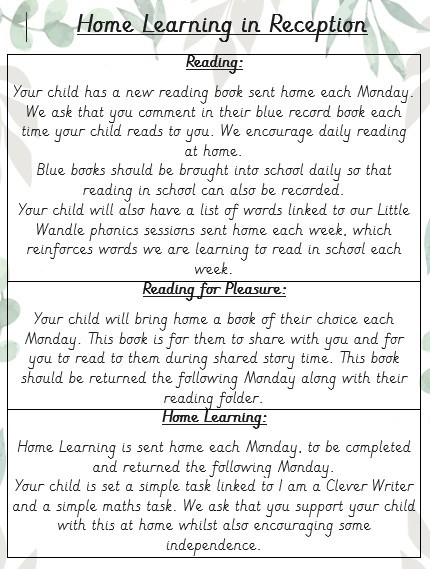
Reading together is one of the most powerful ways to support your child’s learning. Listen to them read their school book, but also enjoy stories, poems and information books together. Talk about the pictures, characters and new words. A few minutes each day helps build fluency, understanding and a lifelong love of books. Please record this is in your child's individual reading diary (and bring them into school every day).
Phonics is fun!
Our phonics teaching follows the Little Wandle Letters and Sounds Revised scheme. You can support your child’s phonics learning at home by asking them about the sound (phoneme) they have been learning in school and helping them spot it in books, signs or labels around the house. Encourage them to say the sound, think of words that begin with it and have a go at writing it. Short, playful activities such as matching objects to their initial sounds, playing “I spy”, or looking for sounds when reading books help build confidence and make learning fun. Little and often is best, and celebrating your child’s efforts will help them feel proud of their progress.
Supporting Early Writing
Encourage writing in meaningful, fun ways. Children love writing shopping lists, birthday cards, labels, signs, stories or simple notes. Praise their ideas and efforts, even when spellings aren’t perfect. In school, children are encouraged to “have a go” using their phonics, and this confidence grows when they feel supported at home too.
Making Maths Part of Everyday Life
Maths is everywhere. Count steps, compare sizes, spot numbers on doors, talk about shapes or use real coins during play. Board games, cooking, measuring and sorting objects all help children develop early number skills. Using practical, concrete objects, such as counters, toys or household items, and drawing simple pictures to represent ideas can make maths clearer and more meaningful for young children. Keeping maths practical and playful helps children see it as something they can enjoy.
Encouraging Talk and Language
Talking with your child is one of the simplest and most effective ways to support learning. Share conversations about their day, ask open‑ended questions and introduce new vocabulary naturally. Singing songs, telling stories and playing imaginative games all help build strong communication skills.
Keeping Learning Fun and Positive
Children thrive when learning feels enjoyable and pressure‑free. Celebrate effort, show interest in what they’re doing and give plenty of encouragement. Small, regular moments of learning at home make a big difference over time.
Key Information
Reception's PE day is on Wednesday. Children should attend school in their PE kit on their PE day.
Uniform: Please ensure all uniform, especially jumpers/cardigans, are labelled with your child’s name and class.
Useful websites (click on the box to open):